
IEEE paper format: layout, headings and references
Updated 19 October 2026
IEEE style is used for engineering, computer science and electronics papers. It is easy to recognise: two columns, small type, numbered citations in square brackets and a numbered reference list. This guide explains the parts so you can check your own paper.
At a glance
- Page layout
- Two columns, US Letter or A4, narrow margins
- Font
- Times New Roman or similar, about 10 pt in the body
- Headings
- Roman numerals in capitals (I. INTRODUCTION), subsections A., B.
- In-text citation
- Number in square brackets: [1], [2], [4]-[6]
- Reference list
- Titled References, numbered in order of first citation
- Figures and tables
- Figure captions below ("Fig. 1."), table captions above ("TABLE I")
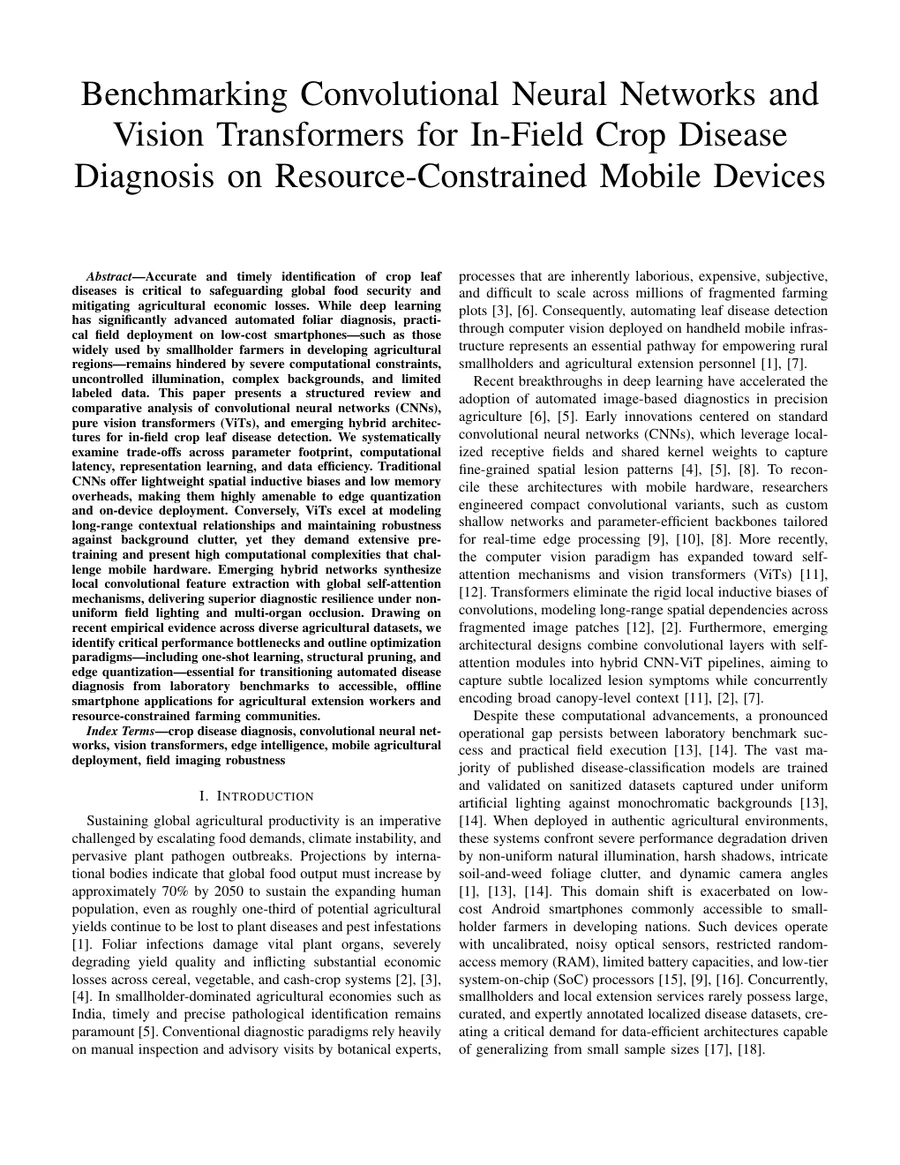
Parts of an IEEE paper, in order
- Title, centred, then the authors and their affiliations.
- Abstract: one paragraph, usually 150 to 250 words, with no citations and no abbreviations that are not explained.
- Index terms: a few keywords in alphabetical order.
- Numbered sections, normally Introduction, Related Work or Background, Method, Results, Discussion and Conclusion.
- Acknowledgment if needed, then References.
Headings, equations, figures and tables
- Section headings are numbered with Roman numerals and set in capitals: "I. INTRODUCTION". Subsections use capital letters: "A. Data collection".
- Equations are numbered on the right in round brackets, (1), and referred to as "(1)" in the text.
- Figure captions go below the figure and start with "Fig. 1." Table captions go above the table and use Roman numerals: "TABLE I".
- Refer to each figure and table in the text before it appears.
Citations in the text
IEEE uses numbers, not author names. The first source you cite is [1], the next new one is [2], and so on. If you cite the same source again, use its first number again. Put the number before the full stop. Several sources can be written as [1], [3] or as a range [4]-[6].
The reference list
References are listed by number, in the order they were first cited, not alphabetically. Journal names are normally abbreviated, months are abbreviated, and more than six authors can be shortened to the first author followed by "et al.", but your publisher may ask for something different.
[1] A. Author and B. Author, "Title of the article in sentence case," Abbrev. Journal Title, vol. 12, no. 3, pp. 100-115, Mar. 2021, doi: 10.xxxx/xxxxx.
Quick checklist
- Every number in the text has a matching entry in the list, and every entry is cited at least once.
- Numbers appear in order of first use.
- The abstract has no citations; figures and tables are numbered and mentioned in the text.
- You have read the template your conference or journal provides. It always wins over a general guide.
Common questions
Is IEEE format the same for every IEEE conference?
The core rules are the same, but each conference or journal publishes its own template and page limit. Use the official template for the venue you are submitting to.
Do I list references alphabetically in IEEE?
No. IEEE lists references by number, in the order they are first cited in the paper.
Which font does IEEE use?
Times or Times New Roman, about 10 pt in the body text, in two columns.
See your own idea in this style
Write your research idea and choose the format. You get a free preview with your title, a real opening paragraph and a real page of the layout before you pay for anything.
ResearchBerry is a drafting aid. You are the author: check every source and follow your institution's rules on AI tools.